

To effectively use color coding in your spiritual journal, assign specific colors to different emotions, moods, or life aspects. For instance, use green for growth, yellow for joy, and purple for anxiety. This approach not only enhances your writing experience but also helps you track emotional patterns over time. You’ll gain deeper insights into your feelings and experiences, creating a vibrant visual map of your journey. Discovering how to refine this practice can lead to even greater transformations.

Turn your quiet moments into listening time
- Thousands of audiobooks, podcasts and originals
- Listen on your phone, tablet or Echo — also offline
- Cancel anytime
Key Takeaways
- Assign specific colors to represent different emotions, enhancing clarity in expressing feelings in your spiritual journal.
- Use color coding to track your mood over time, helping identify emotional patterns and shifts.
- Categorize entries by life aspects, such as personal growth or relationships, using distinct colors for easy navigation.
- Explore personal symbolism of colors to deepen your emotional connection with journal entries.
- Embrace your favorite colors to personalize the journaling experience, fostering creativity and engagement.
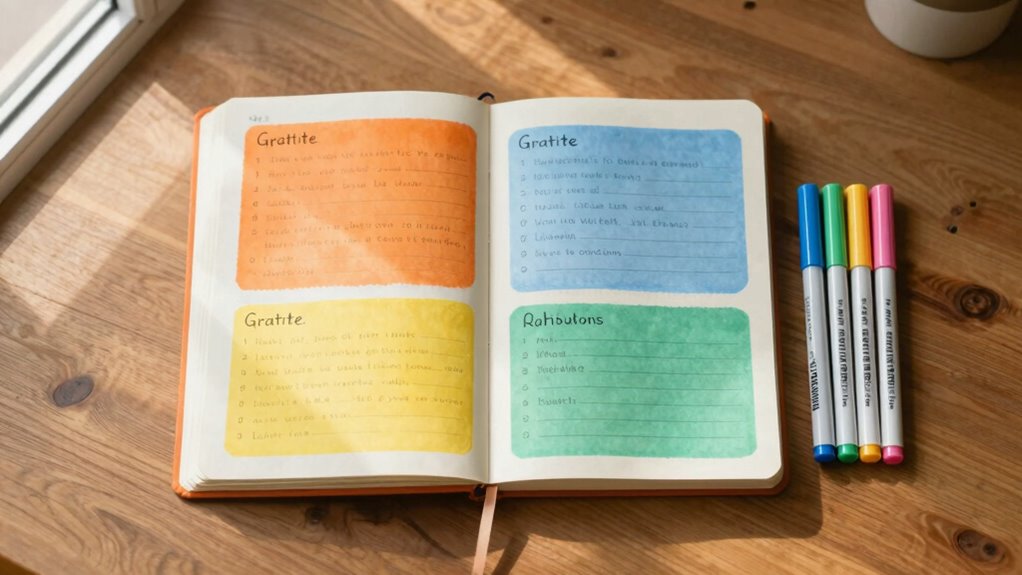
Color coding can transform your spiritual journal into a vibrant tool for self-discovery and reflection. By using different colors, you can enhance your writing experience and make it more engaging. Each color carries specific meanings and emotional associations, which helps you express your feelings and thoughts more clearly. For instance, blue often signifies calmness and tranquility, while red can represent passion or anger. Understanding these color meanings allows you to tap into your emotions with greater accuracy.
When you’re journaling, think about what each color means to you personally. This personal symbolism can deepen your connection to your entries. You might decide that green represents growth and renewal, while yellow signifies joy and positivity. By assigning colors that resonate with your feelings, you’re not just tracking your mood; you’re creating a visual representation of your emotional landscape. This makes it easier to see patterns over time, helping you identify triggers and shifts in your feelings.
Consider the personal meanings of colors in your journaling; they can deepen your emotional connection and reveal patterns in your feelings.
Mood tracking becomes more effective when you incorporate color coding. As you write about your day, feelings, or spiritual insights, use a specific color to highlight the mood you’re experiencing. For example, if you’re feeling anxious, you could write in purple, while a day filled with gratitude might be marked in gold. Over time, you’ll find that you can quickly scan your journal and see how your mood fluctuates. This awareness can lead to greater self-understanding and help you navigate your spiritual journey more effectively.
You can also use colors to categorize different aspects of your life. For example, assign one color for personal growth, another for relationships, and yet another for spiritual insights. This creates a visual map of your experiences, making it easier to reflect on specific areas. When you look back, you’ll immediately see where you’ve focused your energy and attention.
Incorporating color coding into your spiritual journal isn’t just about aesthetics; it’s a practical method for enhancing your self-reflection. By understanding color meanings and their emotional associations, you’re not only enriching your journaling experience but also fostering personal growth. So grab your favorite pens, embrace the colors that speak to you, and let your spiritual journal become a canvas for your journey. You’ll find that this simple tool can lead to profound insights and transformations in your life.
As an affiliate, we earn on qualifying purchases.
Frequently Asked Questions
What Materials Do I Need for Color Coding in My Journal?
For color coding in your journal, you’ll need colored pens or markers, highlighters, and sticky notes. Consider using a color chart that aligns with color psychology to enhance your journaling benefits. Each color can represent different themes or emotions, helping you visually organize your thoughts. You might also want stencils or washi tape for added flair. With these materials, you’ll make your journaling experience more vibrant and meaningful.
Can I Use Digital Tools for Color Coding?
Absolutely, you can use digital tools for color coding! Many journaling software and productivity tools offer customizable color schemes. Apps like Notion or Evernote let you highlight text or categorize entries with different colors, making it easy to organize your thoughts. You can even create tags or labels in specific colors to enhance your journaling experience. Embrace the flexibility of digital apps to make your spiritual journey more vibrant and engaging!
How Do I Choose My Color Meanings?
Choosing your color meanings is like painting your soul’s canvas. Start with color psychology; each hue carries its own emotional resonance. Think about your personal associations with colors—what do they evoke for you? Trust your intuition; let colors that resonate deeply guide you. Experiment and see which combinations spark joy or insight, allowing your journal to reflect your unique spiritual journey. Embrace the process, and watch your creativity flow!
Is There a Specific Color Palette Recommended?
There isn’t a one-size-fits-all color palette, but you can start with colors that resonate with you. Consider color psychology; for instance, blue often represents calmness, while red can evoke passion. Think about emotional associations, too—green might symbolize growth, and yellow can bring joy. Experiment with different shades and see how they make you feel. Trust your instincts; your personal connection to colors is what truly matters in your spiritual journey.
How Often Should I Update My Color Coding System?
You should update your color coding system regularly, ideally every few months. As you reflect on your entries, pay attention to how color frequency affects your emotional impact. If a specific hue no longer resonates, switch it out for one that aligns better with your current feelings. This keeps your journal fresh and meaningful, allowing you to track your spiritual journey effectively. Trust your intuition—it’s your guide in this colorful exploration!
Conclusion
So, you thought color coding was just for kids’ art projects, huh? Well, surprise! By embracing this playful technique in your spiritual journal, you’re not just organizing thoughts; you’re uncovering deeper insights into your soul. Each hue becomes a key to revealing emotions and intentions you might’ve otherwise overlooked. Who knew that a splash of color could lead to such profound self-discovery? Immerse yourself, let your colors shine, and watch your spiritual journey transform into a vibrant masterpiece.
Fall Picks
fall essentials
As an affiliate, we earn on qualifying purchases.