
Angel numbers have roots that go back to ancient civilizations, where people saw numbers as divine symbols and cosmic messages. Cultures like Egypt, China, and Greece used numerology for spiritual guidance, dream interpretation, and connecting with higher beings. Over time, angelic messaging appeared in religious texts, signifying divine communication. Today, their popularity has grown through modern tools and cultural influences. To discover how this fascinating phenomenon evolved further, keep exploring this intriguing history.
Key Takeaways
- Angel numbers have roots in ancient numerology practices from civilizations like Egypt, Greece, and China.
- Early spiritual systems viewed numbers as divine symbols conveying cosmic and spiritual messages.
- References to angelic messaging appeared in religious texts, emphasizing divine communication through symbols.
- The modern concept of angel numbers gained popularity in the 20th century with the rise of New Age spirituality.
- Cultural variations influence the interpretation and significance of specific number sequences globally.
Early Spiritual and Mystical Roots of Number Symbolism
The early spiritual and mystical roots of number symbolism trace back to ancient civilizations that saw numbers as more than mere quantities—they believed they held special meanings and divine powers. You can see this in early numerology practices, where numbers were assigned symbolic significance beyond math. Mystical number symbols appeared in Egyptian, Chinese, and Greek cultures, representing deities, cosmic principles, or spiritual truths. These civilizations used numbers to interpret dreams, predict events, and connect with higher spheres. Their reverence for numeric patterns laid the groundwork for later spiritual systems. By understanding these origins, you gain insight into how numbers became sacred tools for communication with the divine and the universe, shaping the foundation of what we now call angel numbers.
The Influence of Numerology in Ancient Civilizations
Ancient civilizations actively integrated numerology into their spiritual and daily practices, believing numbers carried divine messages and hidden truths. They used numerology practices to interpret the universe, assigning spiritual significance to numbers. For example, the Egyptians employed ancient number symbols in hieroglyphs and rituals, linking specific numbers to gods and cosmic principles. The Chinese used numerology to select auspicious dates and understand life’s patterns, while the Greeks associated numbers with philosophical concepts, exemplified by Pythagoras’s teachings. These civilizations saw numbers as more than mere quantities; they were sacred tools for understanding reality. Their use of ancient number symbols and numerology practices laid the groundwork for later mystical and spiritual traditions, influencing how humans interpret divine communication through numerical patterns. The significance of numbers in these cultures underscores their role in shaping spiritual beliefs and practices.
The Rise of Angelic Messaging in Religious Texts and Traditions

Throughout religious texts and spiritual traditions, angelic messaging has increasingly gained prominence as a means of divine communication. You’ll notice how sacred writings often use spiritual symbolism to convey messages from angels, guiding followers and offering reassurance. These messages serve as signs of divine intervention and protection, reinforcing the idea that angels communicate through symbols, numbers, and visions. Over time, such references underscore a belief in celestial messengers delivering guidance beyond human understanding. This rise reflects a desire to connect with the divine on a personal level, emphasizing that spiritual symbolism isn’t just metaphorical but a direct channel for divine communication. Additionally, cultural practices like numerology and symbolism have played a role in shaping how these messages are interpreted and understood. As this tradition evolved, angelic messaging became a powerful aspect of religious and mystical practices worldwide.
Modern Interpretations and Popularization of Angel Numbers
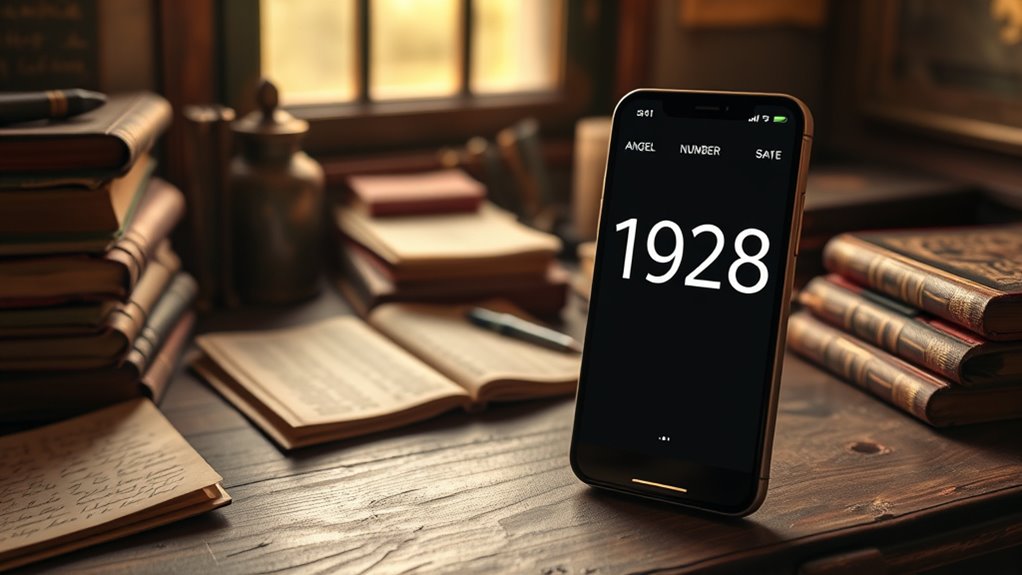
In recent years, the concept of angel numbers has surged in popularity, becoming a common way for you to seek guidance and reassurance in everyday life. The digital age has fueled this trend, making numerology more accessible through apps and social media. People now interpret repeated numbers like 111 or 444 as messages from the universe. These modern interpretations often blend traditional beliefs with new-age ideas, creating a dynamic landscape of numerology trends. Additionally, the visual symbolism associated with specific number sequences has contributed to their mystical appeal.
Cultural Variations and Global Perspectives on Number Significance
Different cultures assign unique meanings to numbers, reflecting their beliefs, traditions, and spiritual practices. These cultural beliefs influence how people interpret numerical symbolism worldwide. For example:
- In Chinese culture, the number 8 symbolizes prosperity and luck.
- Western societies often see 7 as a sign of spiritual perfection.
- In Japan, 9 can be associated with suffering due to pronunciation similarities.
- In some African traditions, specific numbers hold ancestral significance.
- Numerology in Western mysticism assigns special meanings to repeating digits like 111 or 222.
- Recognizing cultural variations enriches our understanding of how numerical symbols are interpreted across different societies.
These variations highlight how cultural beliefs shape the interpretation of numbers. Understanding these perspectives helps you see angel numbers not as universal symbols but as culturally embedded messages, offering a richer appreciation for their significance across the globe.
Frequently Asked Questions
How Do Angel Numbers Differ From Other Number Sequences?
You’ll find that angel numbers differ from other number sequences because they carry specific symbolic meanings and are based on numerology patterns. Unlike random or purely mathematical sequences, angel numbers are believed to be messages from your angels or spiritual guides. They often appear repeatedly, guiding you with personalized insights. So, their purpose is more about spiritual guidance and interpretation, rather than just numerical or chronological significance.
Are Angel Numbers Associated With Specific Spiritual Practices?
You often see angel numbers linked to specific spiritual practices, like numerology traditions that interpret mystical symbolism. For example, someone might notice repeating 111s during meditation, believing it signals spiritual alignment. These numbers act as guides, connecting you to higher energies. By exploring numerology and mystical symbolism, you deepen your understanding of your spiritual journey, making angel numbers a meaningful part of your practice.
Can Anyone Interpret Angel Numbers Accurately?
You can interpret angel numbers accurately if you understand their roots in numerology origins and cultural interpretations. Trust your intuition and learn common meanings associated with specific sequences. While guidance from spiritual sources helps, your personal insights and experiences are essential. Remember, angel numbers are personalized messages, so staying open and attentive ensures you grasp their true significance. Practice patience, and over time, you’ll develop confidence in deciphering these divine signals.
What Scientific Evidence Supports the Existence of Angel Numbers?
There’s no solid scientific evidence supporting the existence of angel numbers, as they stem from numerology origins and focus on mathematical patterns. You might notice recurring number sequences, but these often result from cognitive biases like pattern recognition. While many find personal meaning in angel numbers, their claims lack empirical validation, so it’s up to you to interpret them intuitively rather than relying on scientific proof.
How Have Modern Technologies Influenced the Perception of Angel Numbers?
Did you know that over 70% of people believe digital communication influences how they interpret numerology symbolism? Modern technology amplifies angel numbers‘ perception by spreading messages quickly through social media and texts. You’re more likely to notice repeated number sequences, reinforcing their spiritual meaning. This digital age makes it easier to connect with angel numbers, blending ancient symbolism with contemporary communication, creating a new way to interpret guidance from the universe.
Conclusion
Understanding the origins of angel numbers shows how ancient beliefs blend with modern spirituality. From early mystics to today’s pop culture, these numbers have long symbolized guidance and connection beyond the physical domain. Remember, “A journey of a thousand miles begins with a single step.” Embrace these signs as part of your spiritual path, knowing that their roots run deep in history and belief, guiding you softly through life’s mysteries.