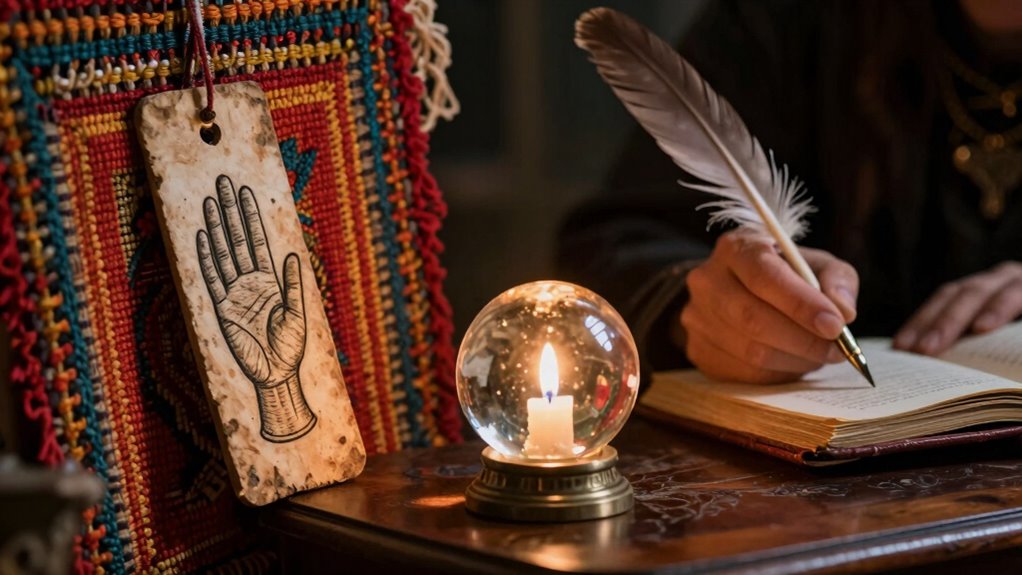

Superstition is rooted in cultural beliefs passed down to avoid misfortune or seek luck, often based on fear and external rituals that lack deeper meaning. In contrast, spiritual interpretation seeks genuine understanding, personal insight, and a connection with something greater than yourself. It evolves with your inner growth, focusing on authentic inner peace rather than superficial reassurance. To truly differentiate between them and deepen your spiritual journey, keep exploring how these concepts influence your beliefs and actions.

Get books, candles and calm essentials delivered free — and shop member deals
- Fast, free delivery on millions of items
- Access to Prime Big Deal Days deals on October 6–7
- Prime Video, Amazon Music and more included
Key Takeaways
- Superstitions are culturally transmitted beliefs aimed at avoiding misfortune, often rooted in fear and misinterpretation of natural events.
- Spiritual interpretation seeks personal insight and connection with higher principles, emphasizing inner growth and understanding.
- Superstitions are static, ritualistic, and lack deep spiritual meaning, while true spiritual insights evolve through reflection and experience.
- Superstitions distract from genuine inner development, whereas spiritual interpretation fosters authentic connection and lasting wisdom.
- Recognizing the difference helps focus on meaningful growth versus superficial beliefs driven by conditioning or fear.

Have you ever wondered what truly separates superstition from genuine spiritual interpretation? It’s a question that taps into the roots of how humans seek meaning in the world around them. Superstitions often emerge from cultural influences that pass down beliefs through generations, shaped by societal norms, local customs, and shared fears. These beliefs tend to be more about avoiding misfortune or inviting luck, rooted in traditions rather than personal or spiritual insight. For example, knocking on wood or avoiding black cats are superstitions that have traveled across cultures, often without a clear rational basis. They serve as societal rituals that provide comfort or a sense of control, but they lack a foundation in deeper spiritual understanding. The historical origins of superstitions reveal how they often stem from ancient fears, misinterpretations of natural events, or attempts to explain the unknown. Over centuries, these beliefs become ingrained, reinforced by stories and social reinforcement that make them seem almost like unavoidable truths. But while superstitions can influence behavior, they rarely connect to a person’s inner spiritual life or a higher understanding of existence. Interestingly, many superstitions also originate from early efforts to explain natural phenomena before scientific understanding developed, which shaped cultural beliefs over time. This historical context highlights how superstitions are often rooted in misinterpretations of natural events rather than spiritual truths. Additionally, these beliefs can sometimes hinder individuals from pursuing a more authentic spiritual connection by focusing on external rituals rather than inner growth. Recognizing the cultural transmission of superstitions helps clarify why they persist, even when their origins are no longer relevant.
On the other hand, authentic spiritual interpretation seeks to understand and connect with something greater than oneself. It’s rooted in personal insight, introspection, and often an ongoing relationship with spiritual or divine principles. Unlike superstitions, which are often rooted in fear and societal conditioning, true spiritual interpretation involves a conscious effort to seek truth and meaning. It’s driven by a desire to grow, to understand one’s purpose, or to deepen a connection with the divine or the universe. This process isn’t based on blindly following tradition; instead, it involves reflection, questioning, and aligning one’s beliefs with personal experiences and inner truths. Historically, spiritual interpretations have developed within systems like religion, philosophy, and mystical practices, each offering frameworks to interpret life’s mysteries and moral questions. These interpretations tend to evolve as individuals grow in their understanding, unlike superstitions, which remain static and often irrational. While superstitions may bring temporary comfort, spiritual interpretation aims for lasting insight, fostering inner peace and authentic connection. It recognizes the complexity of human existence and respects the diversity of paths people take to find meaning, emphasizing personal experience over societal myths. In essence, understanding the difference between superstition and spiritual interpretation allows you to navigate beliefs more consciously—recognizing which serve to genuinely enrich your soul and which merely offer superficial reassurance rooted in cultural influences and historical origins.
spiritual growth meditation journal
As an affiliate, we earn on qualifying purchases.
As an affiliate, we earn on qualifying purchases.
Frequently Asked Questions
How Do Cultural Backgrounds Influence Superstition and Spiritual Interpretation?
Your cultural background shapes how you interpret symbols and rituals, influencing whether you see them as superstitions or spiritual practices. Cultural symbolism often provides specific meanings, while ritual significance guides your understanding of their importance. You might view certain actions as superstitions rooted in tradition or as meaningful spiritual expressions. Your cultural context helps determine whether you see these practices as protective, sacred, or simply cultural customs.
Can Superstition Evolve Into Spiritual Understanding Over Time?
Superstition can certainly shift into spiritual understanding as your beliefs evolve. You might start with myth versus faith, clinging to superstitions, but over time, curiosity and reflection can cultivate a deeper, more meaningful belief. This transformation involves questioning old customs, embracing new insights, and expanding your spiritual horizon. As your understanding deepens, what once seemed superstitious can become a confident, compassionate part of your spiritual journey.
Are There Scientific Explanations for Common Superstitions?
Yes, scientific explanations for common superstitions often relate to psychological biases and cognitive distortions. For example, you might believe in luck due to confirmation bias, where you notice only the times your superstition seems to work. These mental shortcuts help your brain make sense of randomness, but they can also reinforce superstitions. Understanding these biases can help you see superstitions as natural cognitive patterns rather than supernatural truths.
How Do Personal Experiences Shape One’s View of Spirituality Versus Superstition?
Coincidences often lead you to see spirituality or superstition differently. Your personal bias and emotional reasoning shape these views, making you interpret events based on feelings rather than facts. When you experience something significant, it can deepen your spiritual beliefs or reinforce superstitions. These personal experiences create a lens through which you interpret the world, influencing whether you see patterns as meaningful or just chance, shaping your understanding of both concepts.
What Role Does Education Play in Differentiating Superstition From Spirituality?
Education plays a vital role in helping you differentiate superstition from spirituality through educational awareness and critical thinking. It encourages you to question beliefs, analyze their origins, and consider their cultural or scientific basis. By engaging in open-minded learning, you develop a clearer understanding of spiritual practices versus superstitions, allowing you to make informed choices. Ultimately, education empowers you to recognize genuine spiritual growth from mere superstitious rituals.
Conclusion
Imagine walking through a dense forest: superstition is like following a tangled, blinking trail marked by false signs, leading you astray with fear and confusion. Spiritual interpretation, however, is like a clear path illuminated by a steady lantern, guiding you toward understanding and growth. By choosing the right trail, you embrace clarity over chaos, finding meaning that uplifts rather than traps you. Trust your inner light—it’s your true compass in the journey of life.
Halloween Picks
halloween
As an affiliate, we earn on qualifying purchases.