
Number patterns across cultures reveal deep symbolic meanings that reflect your beliefs, values, and history. For example, Western cultures see 7 as spiritual and lucky, while Chinese associate 8 with prosperity. In Japan, 3 symbolizes harmony, and indigenous traditions encode stories through number patterns. These symbols influence daily life, rituals, and architecture, shaping cultural identity. If you continue exploring, you’ll discover even more ways these patterns connect to shared collective consciousness.

Turn your quiet moments into listening time
- Thousands of audiobooks, podcasts and originals
- Listen on your phone, tablet or Echo — also offline
- Cancel anytime
Key Takeaways
- Different cultures assign unique symbolic meanings to numbers, such as 7 for spirituality and 8 for prosperity.
- Number interpretations vary, with some symbols like 13 viewed as unlucky in Western cultures but lucky elsewhere.
- Numbers influence rituals, art, and architecture, reflecting cultural values, beliefs, and collective identities.
- Shared number patterns can unify or divide communities, embodying history, hope, and fears.
- Recognizing these patterns enhances understanding of cultural symbolism and societal practices worldwide.
Have you ever wondered how different cultures recognize and interpret number patterns? It’s fascinating to see how numbers are more than just quantities—they carry deep symbolic meaning rooted in various traditions and beliefs. In many societies, numerology traditions shape how people view specific numbers, assigning them significance that influences daily life, rituals, and even decision-making. For example, in Western numerology, the number 7 is often considered lucky, representing spiritual awakening and introspection. Conversely, in Chinese culture, the number 8 is highly prized because of its phonetic similarity to words meaning prosperity and wealth. These beliefs aren’t random; they’re tied to cultural symbolism that imbues numbers with emotional and spiritual weight.
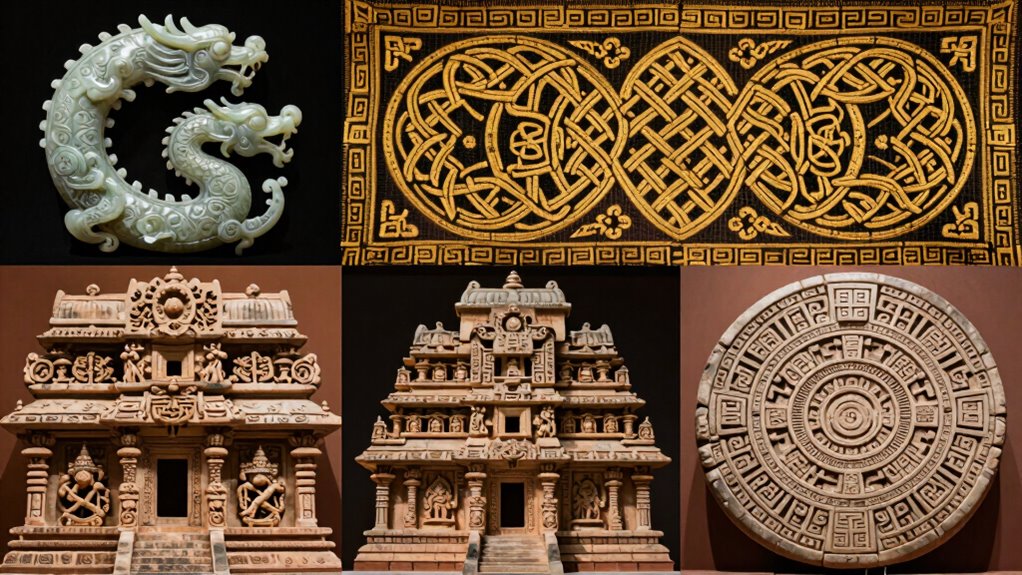
Across different cultures, the way people interpret number patterns reveals underlying values and worldview. In Japan, the number 3 symbolizes harmony and completeness, reflecting the cultural emphasis on balance and unity. Meanwhile, in some Indigenous traditions, number patterns can serve as a form of storytelling or a way to encode history, connecting communities through shared symbolic language. These cultural symbolisms are often reflected in art, architecture, and rituals, where specific numbers appear repeatedly to invoke blessings, protection, or good fortune. Additionally, the influence of historical events or myths further shapes the perceived significance of certain numbers within communities. The meanings attached to numbers often transcend their numerical value, becoming symbols that resonate deeply within a community’s collective consciousness. Recognizing the cultural significance of number patterns can help us appreciate how societies embed meaning into their daily practices and cultural identity.
Number patterns in art and rituals embody cultural symbols, invoking blessings, protection, and collective consciousness.
You might notice that certain number patterns are universally recognized as significant, yet their specific meanings can vary widely. For instance, the number 13 is considered unlucky in many Western societies, often associated with superstition and fear. However, in some cultures like Italy or Spain, 13 can be seen as a number of good luck and renewal. This contrast highlights how cultural interpretations of numbers are shaped by historical context and local beliefs. These varying interpretations demonstrate that numbers are not just abstract concepts but powerful symbols that reflect cultural identities, fears, hopes, and spiritual beliefs.
Understanding these different perspectives can deepen your appreciation for how humans assign meaning to numbers. It’s a reminder that numerical patterns are woven into the fabric of cultural expression, carrying symbolism that can unite or divide communities. Recognizing these patterns helps you see beyond numbers as mere digits and grasp their role as symbols loaded with history, belief, and cultural significance. In addition, the cultural interpretation of numbers often influences traditional practices and societal norms, highlighting their importance beyond simple mathematics. Recognizing the cultural significance of number patterns can also aid in understanding the origins of certain superstitions and rituals, revealing how deeply embedded these symbols are in daily life. Whether viewed as lucky, unlucky, sacred, or mundane, number patterns serve as a mirror to the values and stories that define cultures across the world.
As an affiliate, we earn on qualifying purchases.
Frequently Asked Questions
How Do Number Patterns Influence Daily Life Decisions Globally?
Number patterns influence your daily life decisions through cultural numerology and numerical symbolism. You might choose dates, phone numbers, or addresses based on lucky or unlucky numbers specific to your culture. These patterns can affect your choices in travel, business, or relationships, guiding your actions subconsciously. Globally, people trust these symbols, believing they bring good luck or ward off bad luck, shaping behaviors and decisions daily.
Are There Common Numerical Patterns Shared Across Different Religions?
You might notice that certain numerical symbolism and cultural numerals subtly echo across religions, hinting at shared beliefs or values. For example, the number three often signifies divine harmony, while seven symbolizes perfection. These common patterns suggest a universal language of numbers, transcending specific traditions. Though each culture has its unique numerals, the underlying symbolism weaves a quiet thread of connection, revealing a collective understanding of life’s deeper mysteries.
How Do Cultural Differences Shape Interpretations of Specific Number Sequences?
Cultural differences heavily influence how you interpret symbolic sequences in numerology. In some cultures, certain numbers represent luck or spirituality, while others carry negative connotations. You might see specific sequences as sacred or ominous based on your cultural background. Cultural numerology shapes these perceptions, making the meaning of number patterns unique, even if they share common roots. Your understanding of symbolic sequences varies widely across different cultural contexts.
What Role Do Numerology and Superstition Play in Cultural Practices?
Numerology and superstition deeply influence cultural practices by shaping beliefs around numerical symbolism. For instance, in China, the number 8 is considered extremely lucky, often used in celebrations and business deals, while the number 4 is avoided due to its association with death. These cultural superstitions guide behaviors, reflecting how numerology affects daily life, rituals, and decisions, reinforcing the significance of numbers beyond mere mathematics.
Can Number Patterns Predict Future Events Across Different Societies?
Number patterns can offer insights through numerical symbolism and pattern recognition, but they don’t reliably predict future events across societies. While some cultures see specific patterns as auspicious or ominous, others interpret them differently. Your belief in their predictive power depends on cultural context and personal intuition. Recognizing these patterns helps you understand cultural values, but don’t rely solely on them for predicting outcomes, as they’re often symbolic rather than predictive tools.
Conclusion
As you explore the tapestry of number patterns across cultures, you realize they serve as threads weaving shared human beliefs and values. These patterns are like a mirror reflecting our collective psyche, revealing how different societies assign meaning to numbers. Recognizing this interconnectedness deepens your understanding, reminding you that beneath diverse customs lies a common rhythm—an invisible dance guiding us through the ages, echoing the universal language of numbers that unites us all.
Fall Picks
fall essentials
As an affiliate, we earn on qualifying purchases.